
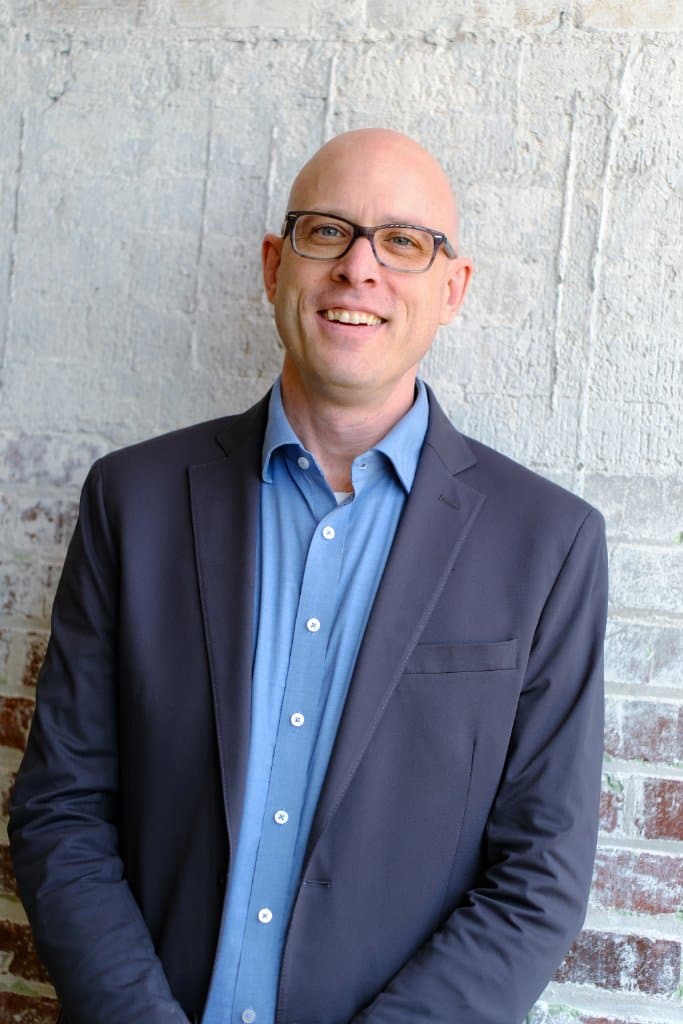
Dr. Chris Ferrand
I work with people who want an active therapy process, one that builds insight and inner wisdom and also hands them something they can use on Tuesday afternoon when no one is watching.
I'm Dr. Chris Ferrand, a licensed psychologist and Health Service Provider in Memphis. I see adults and adolescents who are tired of suffering, ready to work, and hungry to learn, and who have carried overwhelming thoughts, feelings, memories, and patterns long enough.
Most of my career has been spent in a primary care medical setting, where I have practiced since 2016. That shapes everything about how I work. In primary care you see the full range of what human beings bring through a door, and you learn to be useful without a long runway. Physicians have asked me to help with things that would surprise you. I learned to think fast, formulate clearly, ask questions that count, and be specific about what to do next. Working in urban Memphis, I have also spent years alongside people whose lives and cultures are very different from mine, which taught me to adapt rather than assume, and to be helpful in a way that is thorough rather than superficial.
How I work. My primary framework is Acceptance and Commitment Therapy, and the aim is psychological flexibility: learning to feel what cannot be avoided, to get some distance between you and your thoughts, to notice when you have slipped onto autopilot, and to act in line with what actually matters to you even when strong feelings show up. I do not spend the hour only listening and reflecting. I listen very closely, closely enough to pick up what is running underneath your words, and then I name the culprits, traps, and stuck points that seem to be keeping the problem going in your particular circumstances. Then we choose targets together. I usually offer you a menu of options and directions rather than announcing the plan.
I will also ask you to take the tools with you. If you went to the hardware store, picked out the right tool, paid for it, and then left it on the counter, nothing at home would get fixed. Therapy works the same way. We will work hard in session, and then we will set things up so you actually remember to use what you learned when it counts.
I make no assumptions about how long this will take. Some people need a longer course of care and some make a few high-impact changes and find themselves in a different place sooner than they expected. I plan for the second possibility while remaining honest that not everyone experiences it. What I will not do is imply that you are in for years of this and let that quietly become true. I would rather work myself out of a job.
Some people want ongoing therapy. Others want to consult a psychologist about one specific problem and then get on with their lives. Both are legitimate here, and a consultation is often four to six sessions rather than an open-ended commitment. I am trained in Single Session Therapy, so if a brief episode of care is what you are looking for, say so in our first visit and we will build it that way.
Who I work with. I have experience with generalized, social, and health anxiety, performance anxiety, panic attacks, phobias, anxiety about death and dying, major depression and persistent depressive disorder, bipolar disorder, trauma and stressor-related conditions ranging from a single index trauma to a more complex profile, and psychosis. I am accustomed to working with people who are having suicidal thoughts, and I do it without alarm. I see people with alcohol and drug concerns regularly, and we can talk about it without judgment and sort through the options in front of you.
Grief is a particular focus. I have worked with many people through the loss of a spouse, a child, a parent, a friend, and an animal they loved completely. I have learned, both professionally and personally, what tends to help healing along and what tends to slow it down, and I do not rush it. I have also come to care about a grief that people are often embarrassed to bring up, which is the loss of a beloved pet, and about the particular weight carried by veterinary professionals who cannot always save the animals in front of them.
Because I have worked in medicine for a decade, I work with other clinicians constantly: physicians, nurse practitioners, physician assistants, nurses, pharmacists, and dentists. I have also worked in a faith-based health system since 2016 and am comfortable integrating spirituality into psychotherapy when a patient wants that, including with pastors, ministers, and chaplains. I see fellow mental health professionals of every license type, and trainees who want their own therapy. Helping other helpers is a privilege, not a sideline.
One more thing. I have a mind too, which means I know what hard thoughts, painful memories, and unpleasant feelings are like from the inside, and I have to use the same skills I will be teaching you. I am a doctor, and I am also a person sitting with you rather than above you. My working values are simple enough to say out loud: be kind, be genuine, be humble, be dependable, work hard, stay present to what matters, have courage, and do things that matter with some gusto.
Conditions and concerns I treat.
Anxiety and Panic
Phobias
Performance Anxiety
Depression
Bipolar Disorder
Trauma and Stressor-Related Conditions
Grief and Loss
Pet Loss
Health and Illness Anxiety
Adjustment to Serious Illness
Alcohol and Drug Concerns
Suicidal Thoughts
Motivation and Habit Change
Communication Under Stress
Care for Healthcare Professionals
Care for Clergy and Chaplains
Care for Mental Health Clinicians